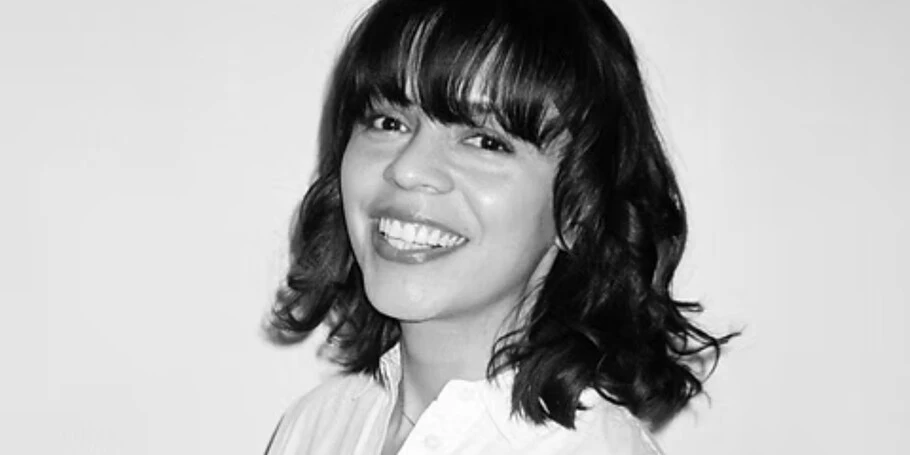
Meet the 2025 Adé Hogue Scholarship recipient: Kat Ispache.
Kat Ispache.
Every year, Monotype and the Type Director’s Club (TDC) award the Adé Hogue Scholarship to an outstanding US-based BIPOC student entering the design industry. This prestigious scholarship, formerly called the “Superscript Scholarship” pays tribute to Broderick “Adé” Hogue, a Chicago-based art director and letterer who was tragically killed in 2021 at the age of 32 while cycling in Chicago’s Near North Side.
This merit-based scholarship helps pay the tuition for one BIPOC student, a rising senior, whose design work demonstrates exceptional talent, sophistication and skill in the use of modern typography.
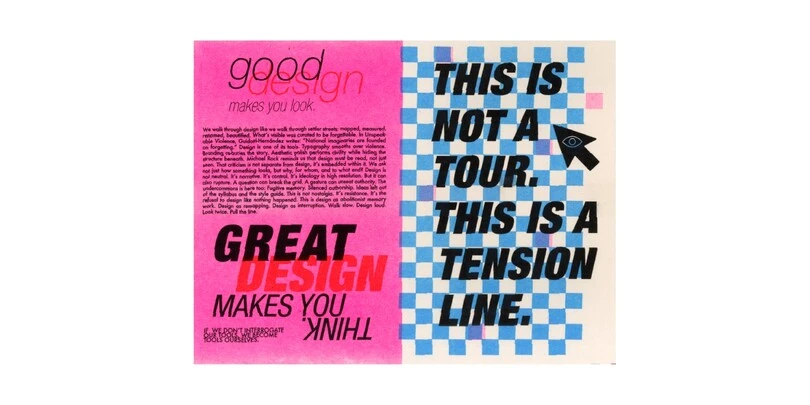
Designer, MFA candidate, and 2025 scholarship winner Kat Ispache offers a thought-provoking perspective on how type can be used as a tool for cultural critique and social change. Her work blends rigorous research with a deep curiosity for visual systems, exploring how design constructs meaning and reflects power dynamics. From her conceptually grounded, type-driven projects to her MFA thesis investigating the destabilization of language, Kat’s approach shows how design can push boundaries and inspire reflection.
Dive into her journey in our recent interview below.
What made you decide to study design — were you always interested in creative pursuits?
I’ve always been drawn to creative work, but design was compelling to me because it sits at the intersection of intuition and structure. I was interested not just in making things look good, but in how visual systems shape meaning, behavior, and power. Studying design formally gave me a language for instincts I already had — curiosity about images, typography, and cultural signals — and helped me understand how those instincts could be sharpened into a practice that’s both expressive and critical.
How would you describe your design style?
My work is type-driven and conceptually grounded, often operating within strict systems that carry emotional or cultural tension. I’m interested in clean, modernist structures that feel slightly unsettled, where neutrality is questioned rather than assumed. Visually, this shows up as restrained palettes, strong typographic hierarchies, and a balance between clarity and discomfort. I’m less interested in decoration and more interested in how form quietly communicates ideology.
What role do you see typography playing in shaping social conversations or cultural movements over the next decade?
Typography will continue to act as infrastructure for social conversation, often invisible, but deeply influential. As more communication becomes compressed, accelerated, and mediated through screens, type choices will increasingly signal values: authority, care, resistance, intimacy. I think we’ll see typography used less as branding polish and more as a political and cultural tool, shaping how voices are amplified, how histories are framed, and whose language is treated as legitimate.
Can you share some of the real-world problems you’re particularly interested in tackling with design?
I’m especially interested in questions around cultural memory, power, and representation, how systems present themselves as neutral while reinforcing specific worldviews. I’m drawn to projects that examine institutional language, archives, education, and technology, and how design can either obscure or reveal the politics embedded within them. Rather than offering quick solutions, I’m interested in design that creates space for reflection, friction, and re-reading.
What role do you think type can play in these kinds of projects?
I think my work reflects a clear point of view and a sustained engagement with typography beyond aesthetics. My projects demonstrate a willingness to question dominant systems, sit with ambiguity, and use type as a way to think, not just to decorate.
What kinds of projects are you working on lately?
The award feels like both recognition and encouragement. It affirms that there’s value in slow, critical, and experimental design work, especially work that doesn’t immediately resolve into clean answers. On a personal level, it supports me at a pivotal moment in my education and practice, allowing me to continue taking risks, deepening my research, and investing in a design path that’s thoughtful, rigorous, and socially engaged.
How did you hear about the Adé Hogue scholarship?
I learned about the scholarship through the design and academic communities I’m engaged with during my MFA in graphic design at CalArts (California Institute of the Arts).
What do you think made you stand out as a winner for the scholarship?
It’s difficult to be sure what exactly made me stand out among so many talented individuals in the type community, but I do my best to serve a bigger purpose with the projects I work on, so possibly that resonated with the judges.
What does the award mean to you personally?
Winning this award means the world to me! A lot of dedication goes into pursuing excellence in the projects I do, so being recognized is a validation of this effort, a sign that I am on the right path and an invitation to keep pushing the boundaries of what I am capable of.


