Type Around the World – Get to Know Torino, Italy
Spotlights
Spotlights
Type Around the World – Get to Know Torino, Italy
In this recurring feature in our “Fonts Having a Moment” series, we’ll be exploring cities around the world through the dual lenses of culture and typography, guided by our friends at Monotype and some of our partner foundries. Join us on this exciting virtual journey!
This time, get to know Torino, Italy with Paco González and Giuseppe Salerno from Resistenza Type.
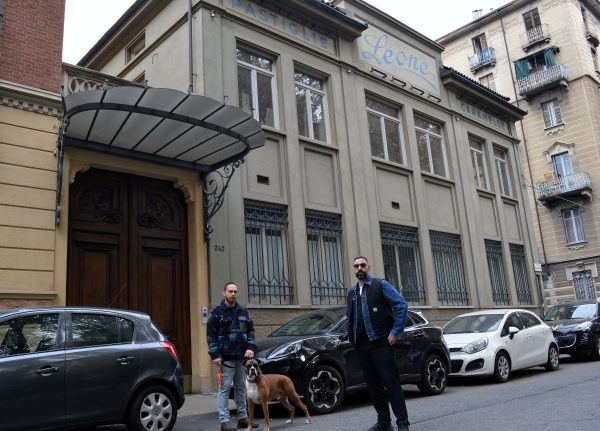
Paco (left) and Giuseppe (right). Photo by Daniel Rocco.
Tell us a bit about yourself and your foundry.
Resistenza Type is the collaborative project that the two of us started in 2008. We both come from cities with rich typographic traditions. Giuseppe is from Torino, with its incredible lettering culture of hand-painted shop signs, elegant Art Nouveau typography under the portici, and layers of beautiful historic signage. Paco hails from Valencia, bringing his own Spanish design sensibilities.
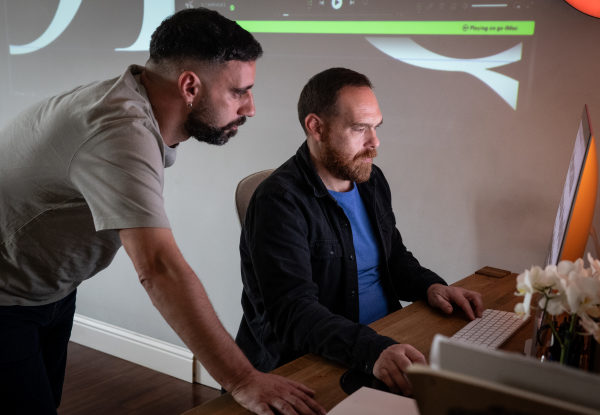
Giuseppe and Paco at work. Photo by Luca Palmer.
Together, we bridge these traditions while creating something entirely contemporary. The foundry is based in Valencia, but Torino is always our second home. The name Resistenza reflects something essential to our philosophy: resistance as persistence, as the determination to maintain quality and craftsmanship in an increasingly homogenized world. Just as Torino has resisted becoming another tourist-driven Italian city by maintaining its authentic character, we create typefaces that resist the purely trendy or superficial.
Traveling between two cities made our growth even more special and brought in diverse elements. We’re very attached to a calligraphic approach when designing fonts and find inspiration in blending different cultures. Our collaboration is rooted in a shared commitment to craftsmanship, like the attention to detail you see in historic signage, where every curve and terminal matters. Our font catalogue includes over 100 font families designed across Spain and Italy. Moving between these two countries kept our creative process fresh and prevented us from falling into repetitive patterns.
What do you love about your city?
Torino is such a fascinating city with a unique character! The city has this wonderful duality — it’s Italy’s automotive capital (as the home to Fiat) with a strong industrial legacy, yet it maintains an incredibly elegant, refined atmosphere.
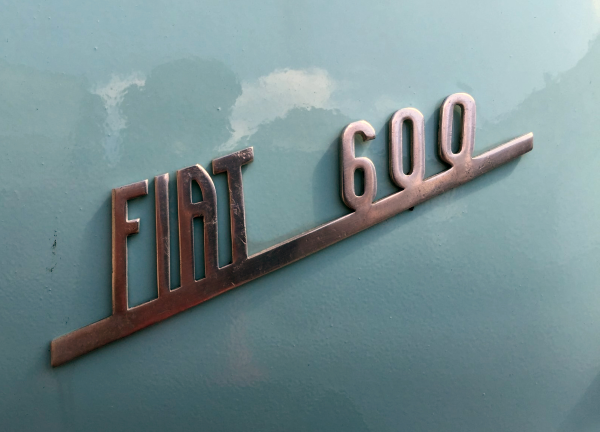
As home to Fiat, Torino is Italy’s automotive capital. Photo by Giuseppe Salerno.
The city center is full of beautiful baroque and neoclassical architecture, grand arcaded streets, and spacious piazzas that give it a regal feel. This city was the capital of the Italian kingdom for four years.
Torino’s historic cafés are legendary, full of carved wood and beautiful marble details. The city also claims to have invented the “bicerin,” that delicious, layered drink of espresso, chocolate, and cream.
One of Torino’s most distinctive features is its setting. You have the Alps as a dramatic backdrop, visible from many points in the city. You’re close enough to go skiing in winter or hiking in summer, yet you’re in a sophisticated urban environment.
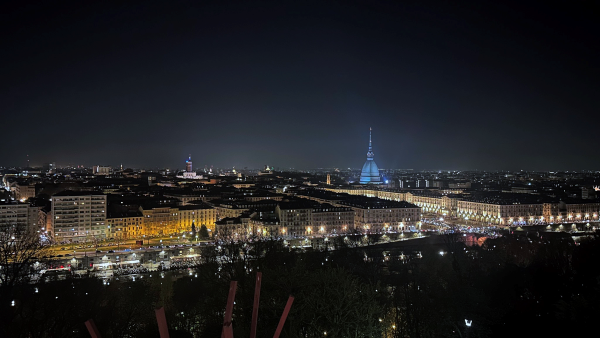
Torino at night. Photo by Giuseppe Salerno.
Torino has an incredible lettering and typography culture that’s often overlooked, but truly distinctive. Walking through Torino’s streets is like exploring an open-air museum of beautiful hand-painted signs and elegant lettering. Many historic pharmacies, bakeries, cafés, and other shops have maintained their original painted signage from the early 20th century. The craftsmanship is stunning, with ornate gold leaf detailing, black backgrounds, decorative elements, and a lot of clear talent.
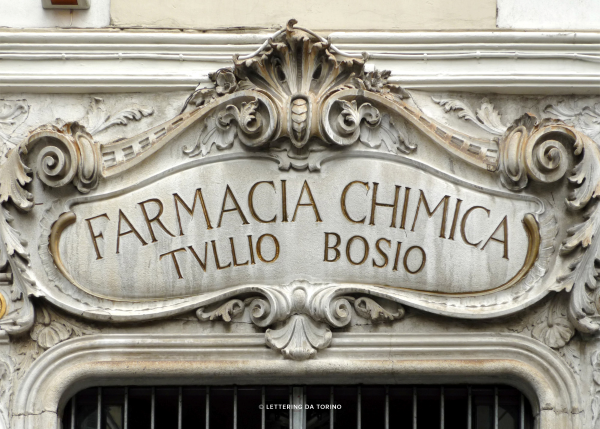
Classic lettering on an old building in Torino. Photo from Lettering da Torino.
Torino embraced the Art Nouveau movement (called “Liberty style” in Italy; see our Lafleur font for a modern example), and you can see this in the flowing, organic letterforms on building façades, shop windows, and even in the beautiful wrought ironwork that incorporates typography.
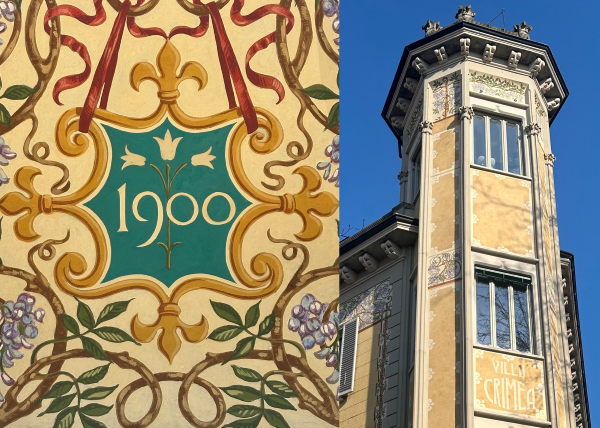
In Torino, Villa Crimea’s Liberty-style façade. Photos by Giuseppe Salerno.
There’s a real attention to how letters interact with architectural elements. Under Torino’s famous covered arcades, the consistent lighting and protected spaces meant that beautiful painted and gilded signs could survive for decades. Walking under the portici, you’re surrounded by layers of typographic history, with some signs dating back a century or more.
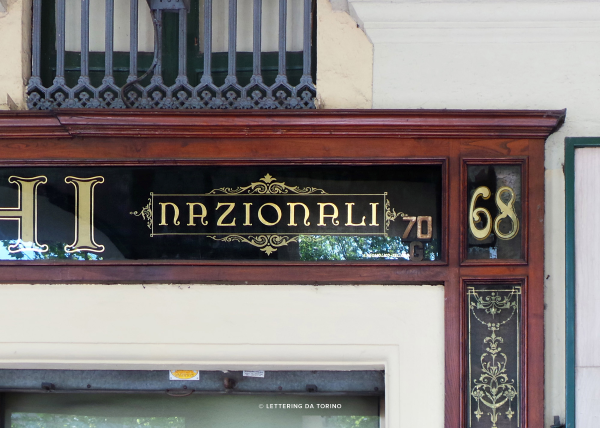
Typographic history can be seen in the beautiful hand-painted signs in Torino. Photo from Lettering da Torino.
Where would you take someone visiting your city for the first time to explore its creative heart?
Pressato Coffee & Books is where I’d take anyone wanting to understand Torino’s creative spirit — it’s also where our Pressato typeface was born.
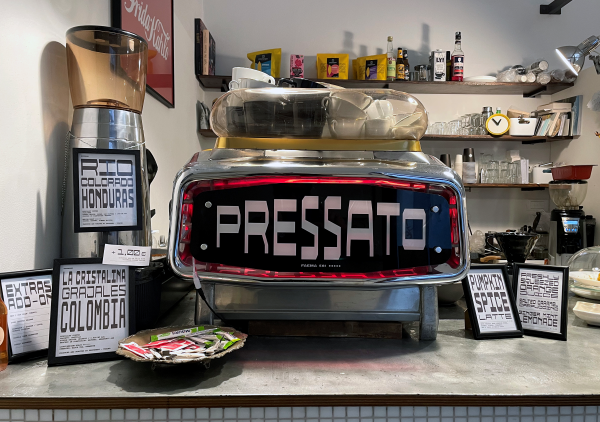
Resistenza’s Pressato typeface at Pressato Coffee & Books in Torino, Italy. Photo by Nello Russo.
The font was designed in collaboration with Nello Russo for the café’s branding, and this coffee shop and bookstore perfectly captures the city’s character: unpretentious but sophisticated, with carefully curated design books alongside excellent coffee, and a lot of type-related books. We highly recommend this café for typophiles and coffee lovers alike!
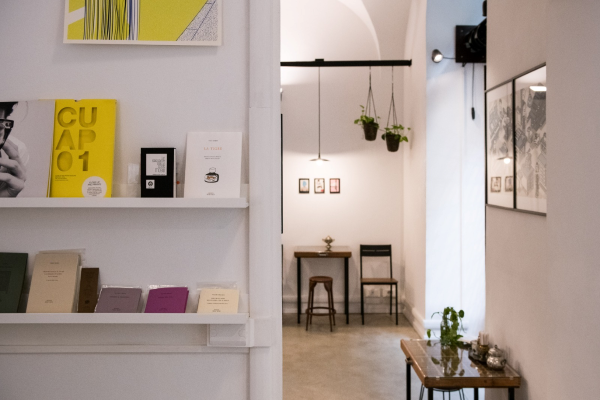
Inside the Pressato café. Photo by Nello Russo.
If you’re visiting in winter (November through January), experience Luci d’Artista — Torino’s extraordinary public light art installations. Since 1998, renowned artists have created large-scale illuminated works throughout the historic center, transforming piazzas and streets into open-air galleries. Walking through the illuminated city on a cold evening, you understand how Torino balances beauty with substance, spectacle with authenticity.
We also love the Balôn flea market, held every Saturday in Borgo Dora, for inspiration. One of Torino’s oldest markets, it’s filled with objects, books, records, furniture, design ephemera, forgotten type specimens, and printed materials that spark new ideas.
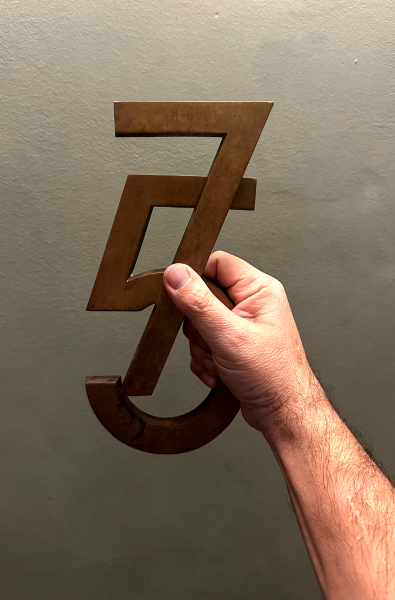
An excellent typographic find at the Balôn flea market. Photo by Giuseppe Salerno.
It’s chaotic, charming, and always rewarding. Torino hosts remarkable cultural events year-round: the Torino Film Festival, Artissima contemporary art fair, Kappa FuturFestival, and Torino Jazz Festival all speak to the city’s range, from experimental music and visual art to cinema and electronic sound. Together, these reveal Torino’s creative heart: thoughtful curation, respect for craft, ambitious public art, and that distinctive quality of doing things seriously without taking yourself too seriously.
What’s a typeface that you think represents the spirit of your city?
Aldo Novarese’s Estro perfectly captures Torino’s spirit.
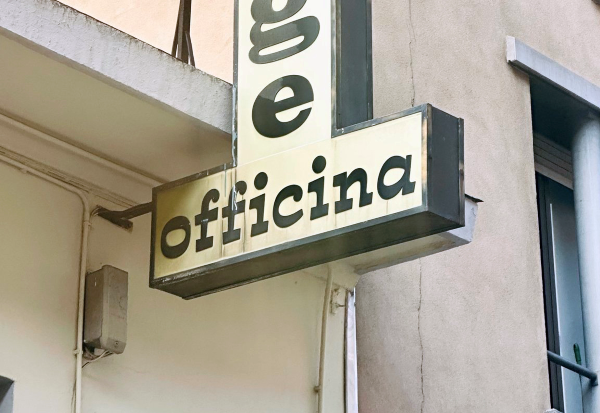
Estro on Torino signage. Photo by Giuseppe Salerno.
Novarese himself was quintessentially Turinese. He worked for decades at the Nebiolo type foundry, Torino’s legendary type manufacturer that was as much a part of the city’s industrial landscape as Fiat. But while Fiat made cars, Nebiolo made letters, and that combination of precision engineering and artistic refinement is pure Torino.
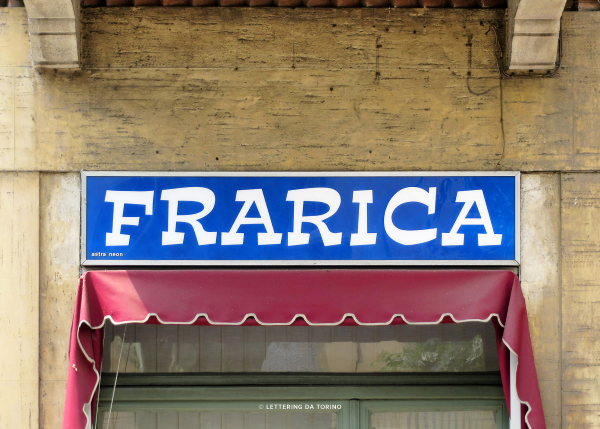
More Estro signage. Photo from Lettering da Torino.
Alessandro Butti and Aldo Novarese were key figures in the growth of the Italian type scene, designing Eurostile®, Stop™, Augustea, and many other fonts that were distributed all over the globe.
Estro is a “fantasy” typeface originally designed by Aldo Novarese for Nebiolo in 1961, intended to grab attention with its unique and adaptable shapes, specifically embodies the city’s character: its friendliness without being precious. Reverse contrast is always so cool. Plus, there’s something fitting about choosing a typeface from the Nebiolo era, when Torino was genuinely at the center of European type design. It’s a reminder that the city’s creative legacy isn’t just architectural or culinary, but typographic too!
To see more typography in Torino (and, as a bonus, Cuneo, Italy) check out this video from Resistenza Type:
Images and video provided by Giuseppe Salerno.