Type Around the World – Get to Know Jakarta, Indonesia
Spotlights
Spotlights
Type Around the World – Get to Know Jakarta, Indonesia
In this recurring feature in our “Fonts Having a Moment” series, we’ll be exploring cities around the world through the dual lenses of culture and typography, guided by our friends at Monotype and some of our partner foundries. Join us on this exciting virtual journey!
This time, get to know Jakarta, Indonesia with Gumpita Rahayu of Tokotype.
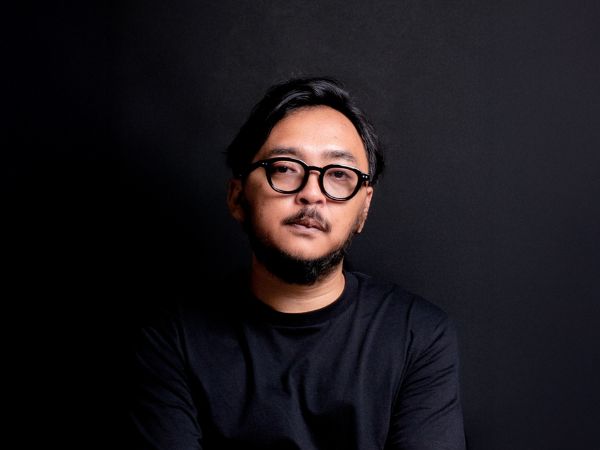
A portrait of Gumpita.
Tell us a bit about yourself and your foundry.
My name is Gumpita Rahayu, and I’m the founder and type designer at Tokotype, a type foundry based in Indonesia. We help brands, agencies, and organizations create custom fonts that fit their needs, from commercial typefaces to fully bespoke typography projects. Before starting Tokotype, I worked as a graphic designer with a strong focus on typography and typeface design. Since 2013, I’ve been working on custom typography projects for major companies and agencies in Jakarta, Indonesia. My goal has always been to help shape Indonesia’s creative industry, with typography at its core.
Tell us about your city. What do you love about it? What’s distinctive about it?
For me, Jakarta always has its own charm. It is one of the most populated cities in the world, and it truly feels like a melting pot. People from all over Indonesia, different races, cultures, languages, and traditions, come together and live side by side in every corner of the city, from the north to the south, east to west. That diversity is something you can feel everywhere you go.
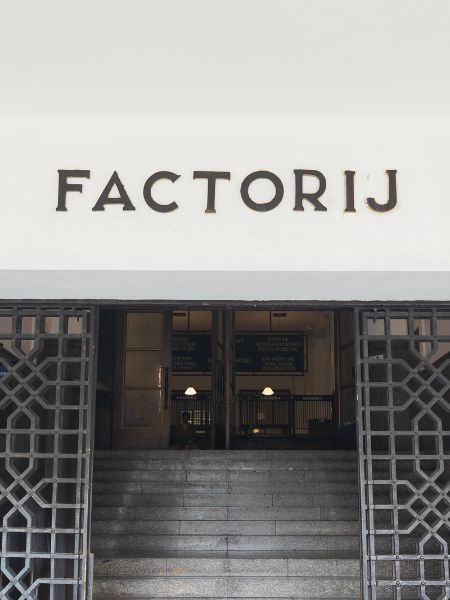
Dutch colonial architecture at Museum Mandiri, Kota Tua.
What I love the most is the energy in the heart of the city. The business districts are filled with tall skyscrapers standing right next to beautiful colonial buildings left behind by the Dutch East Indies era. That contrast, the modern and the historical living together, makes Jakarta feel alive and unique in a way that’s hard to find anywhere else.
But beyond the architecture, what really makes Jakarta special is its street culture. Food stalls, local cafes, and small creative spaces are scattered all over the city. You can find something to eat at any hour of the day or night, and there’s always a cozy spot to work, meet friends, or just hang out. The city never really sleeps, and there’s always something happening around you.
Jakarta can be chaotic, loud, and overwhelming at times, but that’s also part of its personality. It pushes you and somehow, it always finds a way to surprise you.
Where would you take someone visiting your city for the first time to explore its creative heart?
If I wanted to show someone the cultural soul of Jakarta, the first place I would take them is Kota Tua (Old Town). It’s one of the most historic areas in the city, filled with beautiful Dutch colonial buildings, open plazas, street performers, painters, and antique sellers. There are also several museums nearby, Museum Mandiri, Museum Bank Indonesia, and the Wayang Museum, just to name a few. Kota Tua was once the heart of the city during the colonial era, and walking through it feels like stepping back in time while still being surrounded by the energy of modern Jakarta.
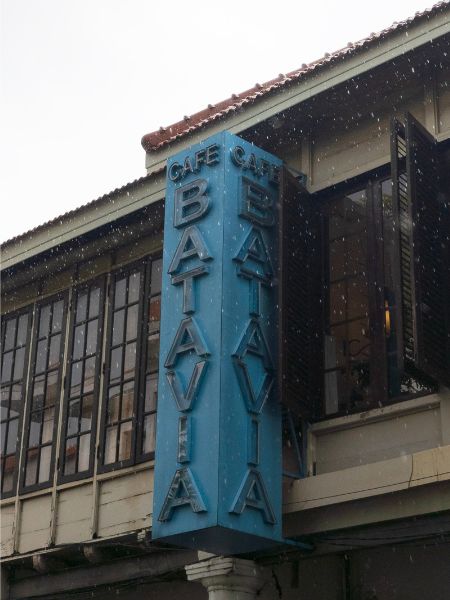
Cafe Batavia, one of the iconic spots at Fatahillah Square in the Kota Tua area.
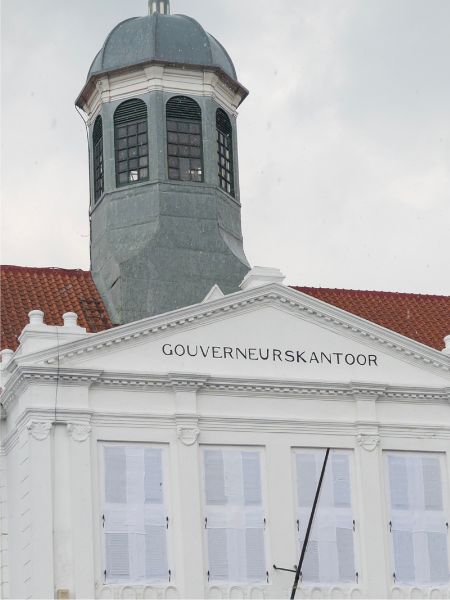
The Old Dutch Colonial Governor’s Office in Kota Tua.
Just a short walk from there, you can explore Glodok, Jakarta’s Chinatown. It’s a completely different atmosphere with narrow streets, street food everywhere, old shops, and a strong sense of community. It’s one of those places where culture, history, and everyday life all mix together in the most natural way.
Then if you head south toward Jendral Sudirman, you’ll find yourself in the middle of the modern business district with tall skyscrapers, busy streets, commercial buildings, and a fast-paced urban energy. It feels like a completely different city compared to Kota Tua, but that contrast is exactly what makes Jakarta interesting.
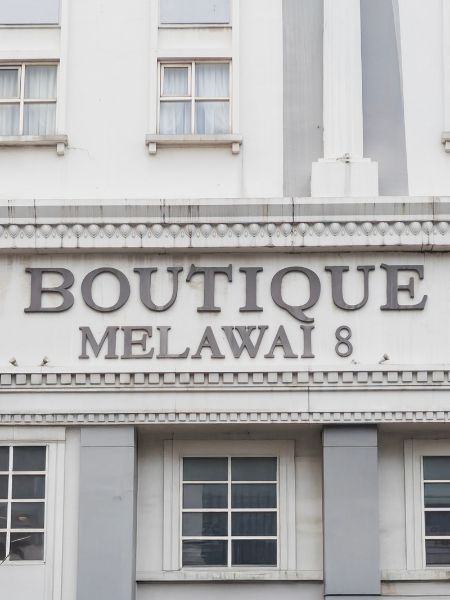
Modern shopfront signage at Melawai, Blok M.
Further south, Blok M at Jalan Melawai is a neighborhood that has grown into a creative and social hotspot. You’ll find cafes, restaurants, live music, and plenty of street food stalls. It’s the kind of place where people come to relax, hang out, and soak in the local vibe.
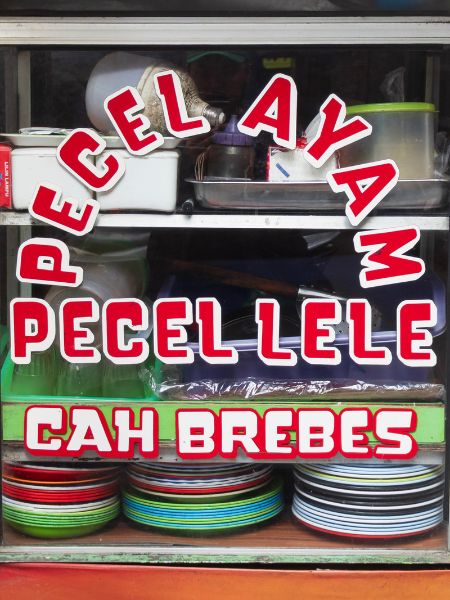
Vernacular hand-lettered signs at local food stalls, Jakarta.
And one thing that is truly unique to Jakarta, and really across Java as a whole, is the hand-painted and hand-lettered shop signs you see everywhere. Local food stalls and small businesses often create their own signage, either hand-painted or crafted from stickers and cutout letters, based entirely on their own taste and creativity. Just pure vernacular expressions. As a type designer, this is something I find incredibly fascinating and inspiring. It’s raw, it’s local, and it’s completely honest.
What’s a typeface that you think represents the spirit of your city and why?
Jakarta is such a diverse city that it’s honestly hard to pick just one typeface to represent it. Every corner of the city has its own character, from old shop signs and street food stalls to large billboards and modern storefronts. Everything feels different, and that’s what makes it so interesting. But if I had to choose, I would say the typeface that best represents Jakarta is one that I designed myself back in 2020, Plus Jakarta Sans.
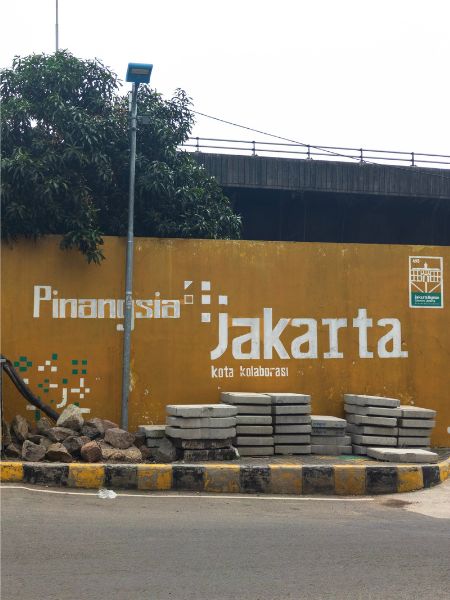
Hand-painted Plus Jakarta Sans campaign displayed across the city.
The project started as a commission through Jakarta’s “City of Collaboration” program, which was an initiative that brought creative people together to contribute to the city. The idea behind the typeface was to capture Jakarta’s spirit as a melting pot, a city where many different cultures, backgrounds, and influences come together in one place.
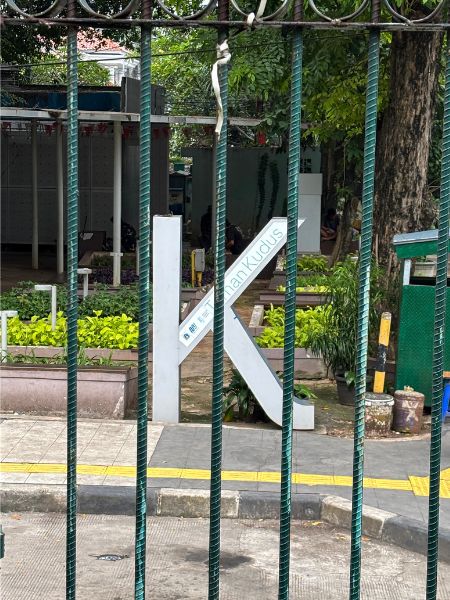
The letter “K” showcasing the stylistic details of Plus Jakarta Sans in Taman Kudus.
What I find special about Plus Jakarta Sans is that when you look at it closely, you start to notice the details. The typeface comes with three stylistic sets called Lancip (Sharp), Lurus (Straight), and Lingkar (Swirl), each giving the font a slightly different personality while still feeling like part of the same family. Just like Jakarta itself, Plus Jakarta Sans has many different sides depending on where you look. Knowing that people all over the world are using a piece of Jakarta every day feels really meaningful to me.
What typefaces are you currently working on?
We just released Sinar Grotesk and I’m really excited about it. It’s a refined sans-serif typeface that blends neo-grotesque precision with the warmth you see in early geometric grotesques. I was really inspired by hallmark grotesques such Akzidenz-Grotesk, Breite Grotesk, and Bauhaus design in general. Sinar Grotesk has a timeless, neutral quality to it, and designers will find that its clear legibility makes it a great fit for UI applications, signage, and editorial projects.
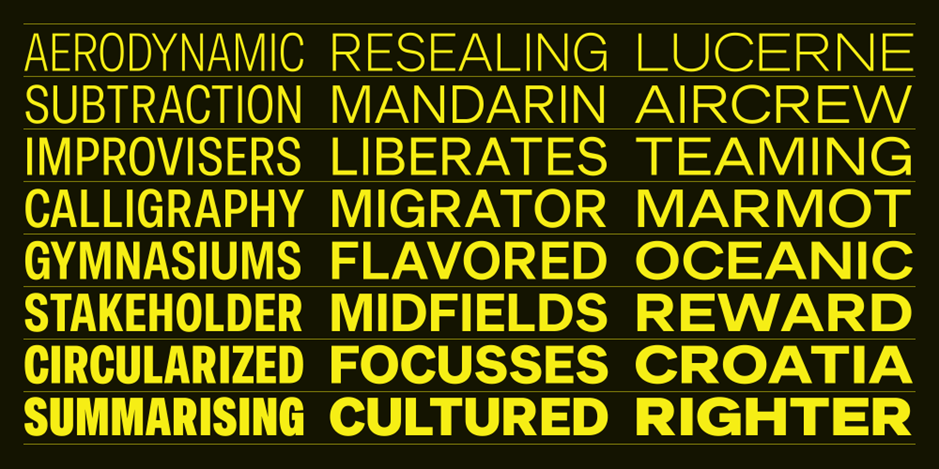
Sample imagery of the Sinar Grotesk typeface, Tokotype’s latest release.