Type Around the World – Get to Know Dubai, UAE
Spotlights
Spotlights
Type Around the World – Get to Know Dubai, UAE
In this recurring feature in our “Fonts Having a Moment” series, we’ll be exploring cities around the world through the dual lenses of culture and typography, guided by our friends at Monotype and some of our partner foundries. Join us on this exciting virtual journey!
This time, get to know Dubai, UAE with Alfredo Marco Pradil of Hanken Design Co®.
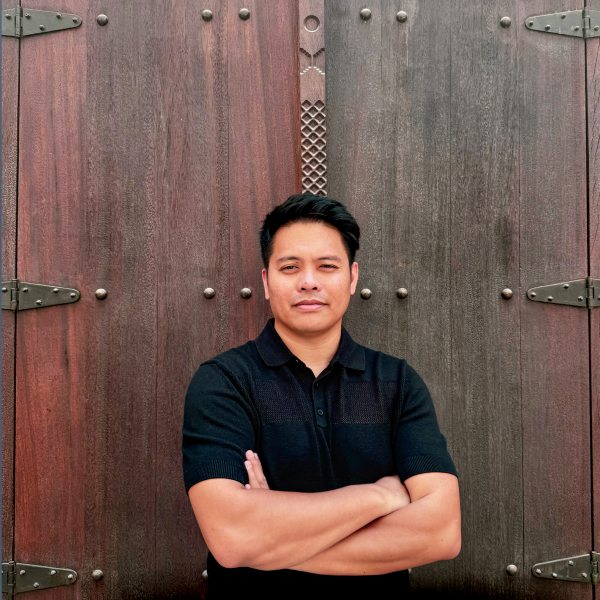
Alfredo Marco Pradil of Hanken Design Co.
Tell us a bit about yourself and your foundry.
My name is Alfredo Marco Pradil. I’m a typeface designer originally from the Batangas province in the Philippines, and I am now based here in Dubai. I have been designing and developing fonts since 2012.
My work spans both countries through two distinct entities: my font foundry, Hanken Design Co, which remains based in the Philippines, and my creative studio, Hanken Design Services, which operates here in Dubai. This structure reflects my design philosophy, which is deeply rooted in my heritage; I believe that letterforms can carry the spirit of a place and its people, and I spend a lot of time exploring the visual culture around me, from the rich, traditional arts of my homeland to the modern, ambitious landscape of Dubai.
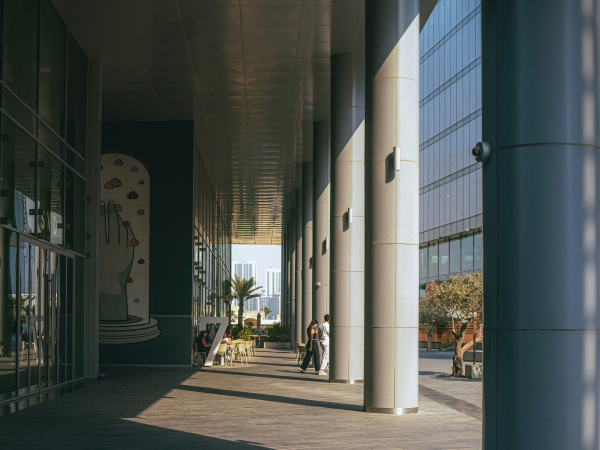
Dubai, home to Hanken Design Services.
Hanken Design Co. focuses on designing and developing fonts, while Hanken Design Services applies the technical aspects of font development to real world projects such as museums, products, visual merchandising, environmental signage, and graphic design for print and screen. We help enterprises and organizations through collaboration and seamless internal team integration.
Living and working in Dubai through Hanken Design Services while maintaining the font foundry in the Philippines gives me a dual perspective. It allows me to see and interpret the layers of meaning in the visual language of a global city like this, finding the human stories behind both the old and the new.
Tell us about your city. What do you love about it? What’s distinctive about it?
For me, Dubai is a city defined by a fascinating and productive duality. What I love most is the constant visual conversation between its two distinct hearts: the hyper-modern and the deeply traditional. On one hand, you have “New Dubai,” a landscape of planned creative hubs like the Dubai Design District (d3), which projects a polished, global ambition. Its typography is clean, geometric, and systematic, perfectly embodied by the official “Dubai Font.” a typeface commissioned by the government of Dubai and developed by Monotype in partnership with Microsoft to present a unified, forward-thinking face to the world.
On the other hand, you have “Old Dubai,” which feels like stepping into a living museum of vernacular typography. In the bustling souks of Deira and Bur Dubai, the visual language is raw, chaotic, and wonderfully human. The old industrial signs are a vibrant mix of Arabic, Farsi, and Hindi, telling a story of the city’s true soul as a multicultural trading hub. It’s this contrast — the sleek, top-down branding of the new city against the organic, bottom-up history of the old — that I find so distinctive and creatively energizing.
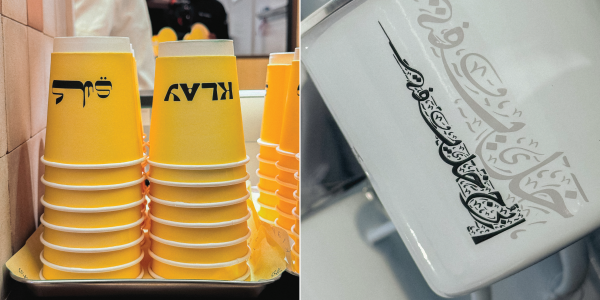
A lot of the brands in Dubai are embracing new design aesthetics especially in typography while retaining traditional ways.
My perspective on Dubai is deeply shaped by my upbringing in Batangas, a province in the Philippines with its own rich history of craftsmanship and visual culture. When I see the deep reverence for Arabic calligraphy here, especially the ancient, angular Kufic script on historical buildings or in art galleries, it resonates with my own connection to Baybayin, the pre-colonial script of the Philippines which has strong roots in my home province of Batangas. Both are ancient writing systems that carry immense cultural weight, a visual soul for their people.
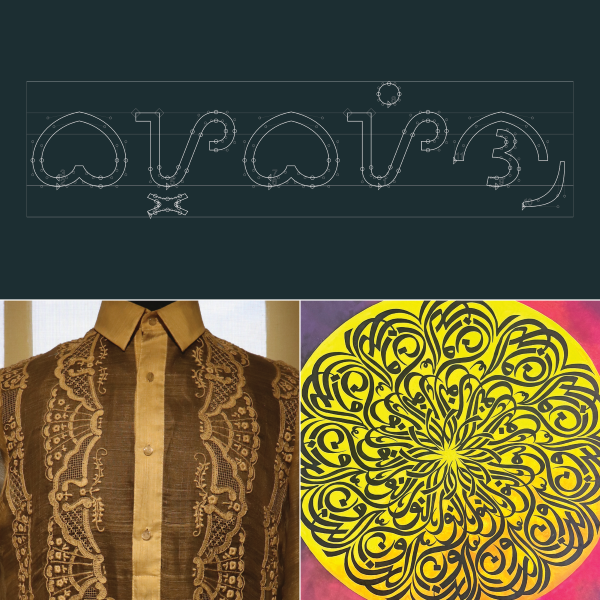
A Baybayin typeface by Hanken Design Co® (top) inspired by contemporary Arabic forms (bottom right) and the Barong Tagalog (bottom left).
This lens helps me see the connections between cultures; for instance, the intricate geometric patterns of Islamic art found in Al Fahidi resonate with the delicate, nature-inspired hand-embroidery of the Barong Tagalog and Baro’t Saya (our national costume) from Taal, Batangas. It’s this ability to see the universal human desire for beauty and identity in craft that makes living in Dubai so fascinating.
Where would you take someone visiting your city for the first time to explore its creative heart?
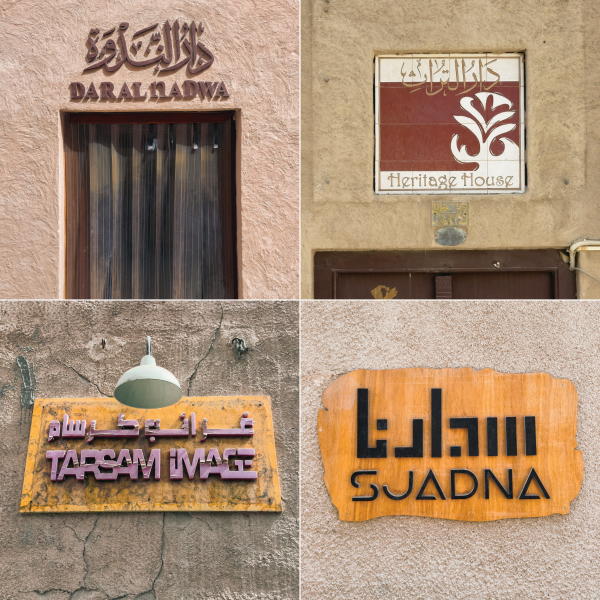
Al Fahidi Historical Neighborhood has been preserved to showcase the past and the forward-thinking minds of the time.
I would take them on a journey that tells the story of Dubai’s creative evolution through its contrasting landscapes. We’d start in the morning in Old Dubai to understand the city’s roots, walking through the quiet alleys of the Al Fahidi Historical Neighborhood to see the 19th-century architecture and the art at XVA Gallery. Then, we’d take a traditional abra boat across the Dubai Creek to immerse ourselves in the vibrant, multilingual typography of the Spice and Gold Souks, which is the city’s raw commercial and cultural pulse.
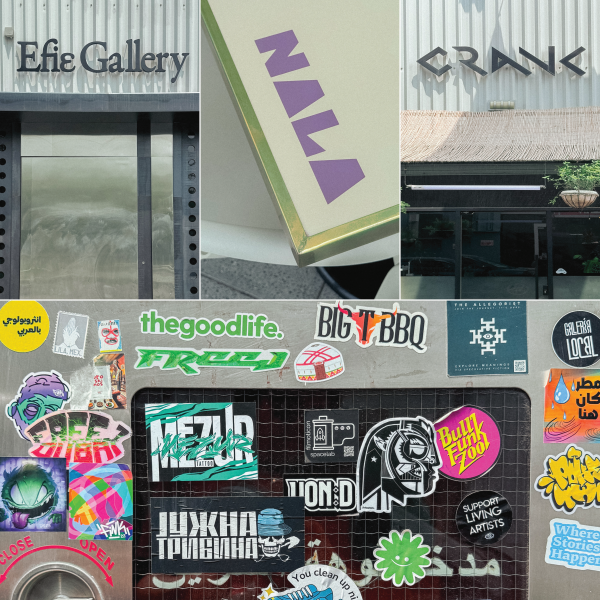
Alserkal Avenue is home to great typography and graphic design spanning from retro-punk to contemporary minimalist.
In the afternoon, we’d shift to the contemporary scene, starting with Alserkal Avenue in the Al Quoz industrial area. It’s a brilliant example of a grassroots arts hub, where warehouses have been organically transformed into the region’s foremost contemporary art galleries, restaurants, cafés, and museums.
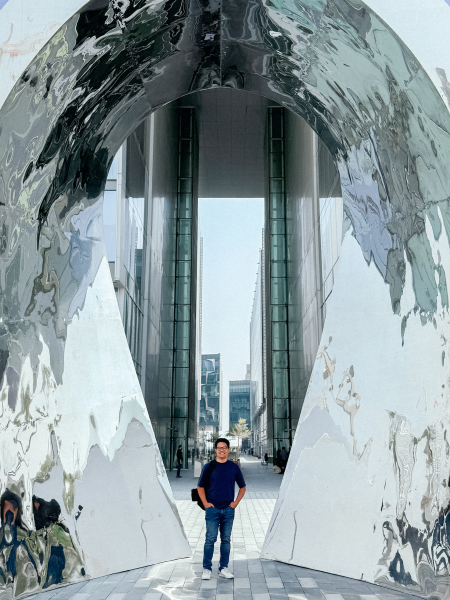
Marco at the Dubai Design District (d3).
We would end the day at the Dubai Design District (d3), which represents the city’s polished, ambitious, and global vision for the future of design. This journey from the historic souks to the sleek, master-planned d3 would perfectly capture the multifaceted creative heart of Dubai.
What’s a typeface that you think represents the spirit of your city and why?
That’s a fascinating question, because from my perspective Dubai’s complex spirit can’t be captured by a single typeface. Instead, its identity lies in a typographic dialogue. The official “Dubai Font” is a remarkable achievement and a perfect starting point. It’s a beautifully designed humanist sans-serif that masterfully harmonizes Latin and Arabic scripts, which I see as a typographic reflection of the city’s multicultural population living and working together. It perfectly represents the ambition, efficiency, and unified global vision of “New Dubai.” It’s the clear, confident voice of the city’s future-facing persona, and it excels at that.
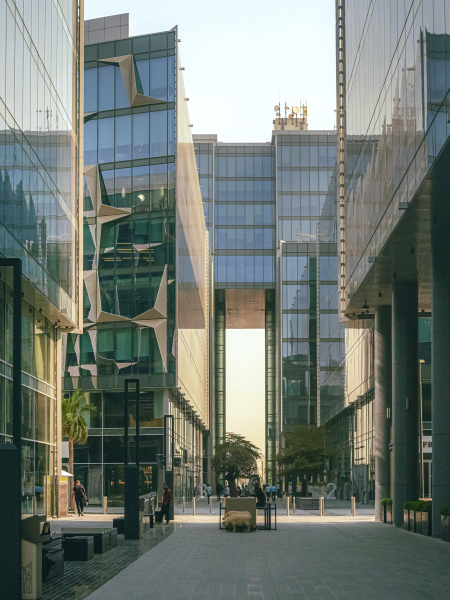
Towering structures at the Dubai Design District.
To tell the whole story, however, I believe the “Dubai Font” needs a partner — a typeface that represents the other half of the city’s soul: the “Old Dubai” of heritage districts and bustling souks. As a designer from Batangas, I find the deep reverence for ancient scripts here incredibly inspiring. The sacred nature of Arabic calligraphy, especially the ancient Kufic script, reminds me of the cultural weight of Baybayin, the pre-colonial Filipino script with strong historical ties to my home province. The ideal partner for the “Dubai Font” would be one that embodies this spirit — a typeface with calligraphic roots, warmth, and texture that captures the soulful, historic energy of Old Dubai.
So, for me, the true typeface of Dubai is this conceptual pairing. It’s the sleek, aspirational “Dubai Font” in conversation with a warm, textured, heritage-inspired script that channels the spirit of ancient writing systems like Kufic and Baybayin. This partnership — one representing the planned future, the other the organic past — truly captures the city’s unique identity, which is forged in the harmony between these two contrasting worlds.