Type Around the World – Get To Know Bali, Indonesia
Spotlights
Spotlights
Type Around the World – Get To Know Bali, Indonesia
In this recurring feature in our “Fonts Having a Moment” series, we’ll be exploring locations around the world through the dual lenses of culture and typography, guided by our friends at Monotype and some of our partner foundries. Join us on this exciting virtual journey!
This time, we’re returning to Indonesia and taking a detour from concentrating on a single city, focusing instead on the culturally and visually lush island province of Bali with Wahyu Setiya Rahmawan of FactoryType Studio (also known as Factory 738).
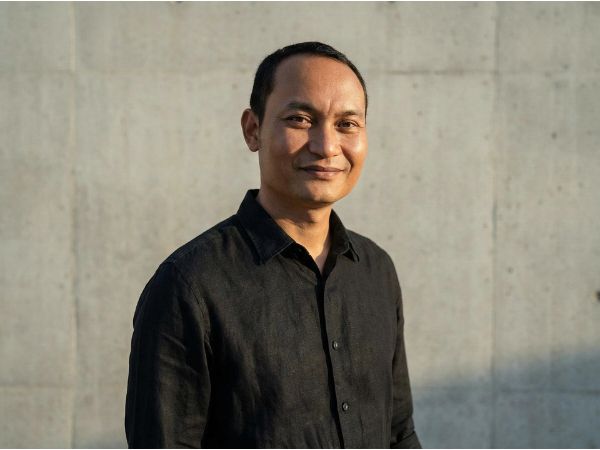
A portrait of Wahyu.
Tell us a bit about yourself and your foundry.
I’m Wahyu Setiya Rahmawan, type designer and the heart behind FactoryType Studio, formerly known as Factory738, based on the beautiful island of Bali. I like to think of typography as the “architecture of expression” — it’s that sweet spot where technical precision meets a very human soul. At FactoryType Studio, we craft reliable tools and custom type for agencies and brands who want their message to feel both solid and inspired.
Living in Bali gives me a perspective I couldn’t find anywhere else. I’m constantly inspired by how our ancient heritage lives side-by-side with modern life. At FactoryType, I try to pour that same balance into our fonts — making sure they are technically perfect but still feel like they have a story to tell. For us, “perfection” isn’t just about the drawing, but also the engineering behind it. We spend a significant amount of time on the invisible details — fine-tuning the kerning pairs and optimizing variable font axes — to ensure that our instruments perform flawlessly across any digital environment.
Tell us about the island of Bali. What do you love about it? What’s distinctive about it?
To me, Bali is much more than just a beautiful place to look at; it’s a living, breathing community where art and everyday life just seem to click. What I love most is how you can see incredible craftsmanship everywhere you turn. It’s in the way a temple is built with such perfect geometric logic, but also in the free and expressive strokes of a hand-painted shop sign on the corner. Here, visual expression is the foundation of everything we do.
The island has this unique rhythm that you can’t quite find anywhere else. It’s a place where old traditions actually help keep our new ideas grounded. You’ll see ancient ceremonies happening right next to modern creative hubs, where local artisans and global designers work side by side. This duality is what defines our “Bali rhythm.” It teaches us that you can be deeply traditional in your values while being cutting-edge in your execution. This atmosphere is exactly what allows us to build typographic tools that carry a bit of soul while working perfectly for the world.
Where would you take someone visiting Bali for the first time to explore its creative heart?
If you really want to understand how the architecture of expression comes to life here, I’d take you on a little journey through Bali’s wonderful visual contrasts:
The artisans of Ubud. We’d start at the Ubud Art Market, Ubud Palace, and the nearby museums. I love showing people the incredible detail in the traditional wood carvings and ancient Balinese script. To me, these are the original blueprints of our island’s visual language.
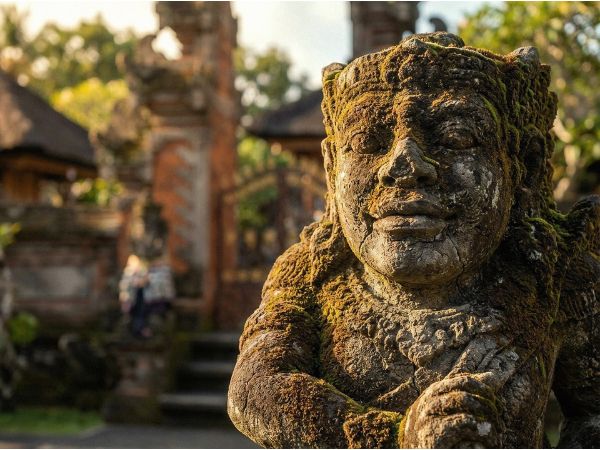
Ubud’s stone carvings demonstrate balance and geometric logic, providing the perfect structural foundation that inspires FactoryType’s serif typefaces.
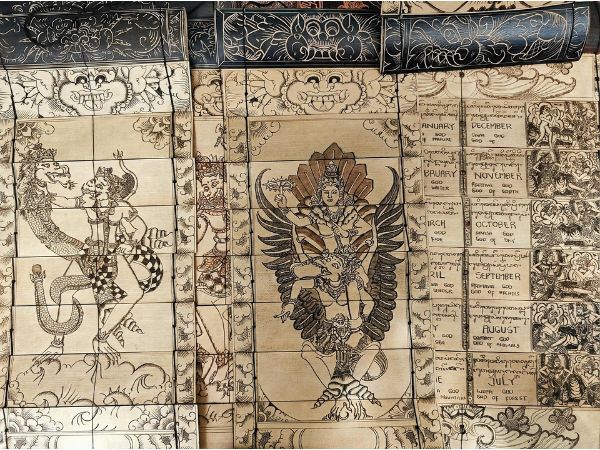
Traditional Balinese lontar leaves serve as an ancient, organic canvas for intricate scripts incised by hand.
The character of the streets. Next, we’d grab a coffee at some small local “warungs.” I find so much inspiration in the hand-painted signs and local typography you see on the streets. It’s raw, it’s human, and it represents the soul of how we communicate every day.
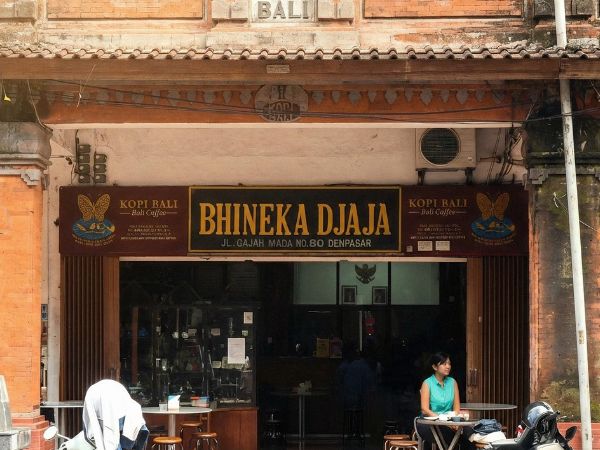
Walking through Gajah Mada Street in Denpasar is like visiting a living type museum. The bold, hand-crafted letters of Bhineka Djaja exemplify the timeless authority of classical signage in Bali.
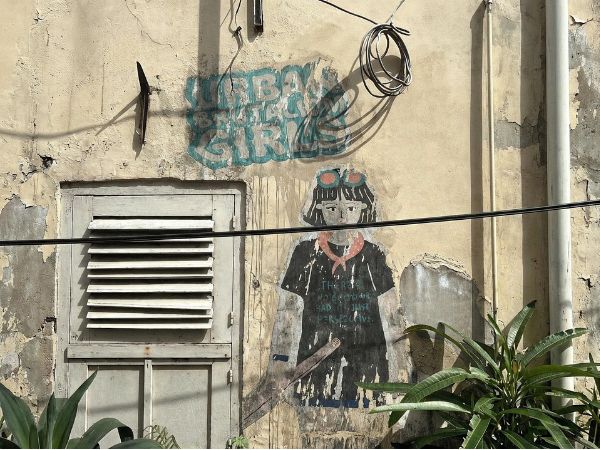
Typography in the wild. This urban mural in Denpasar captures the raw, human soul of the city.
The rhythm of Tabanan. We can’t miss the rice fields of Tabanan. Aside from being beautiful, these landscapes are like a masterclass in rhythm and organic structure. They remind me that even the most creative expressions need a good, functional system to work.
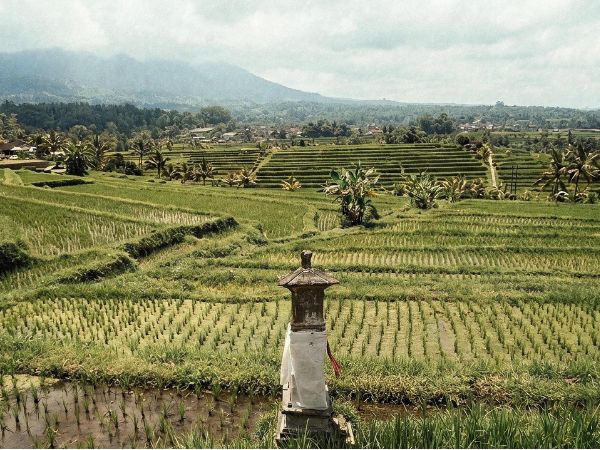
This landscape of rice fields demonstrates that even the most creative expressions need a precise, functional system — much like the subak irrigation that has sustained this geometry for centuries.
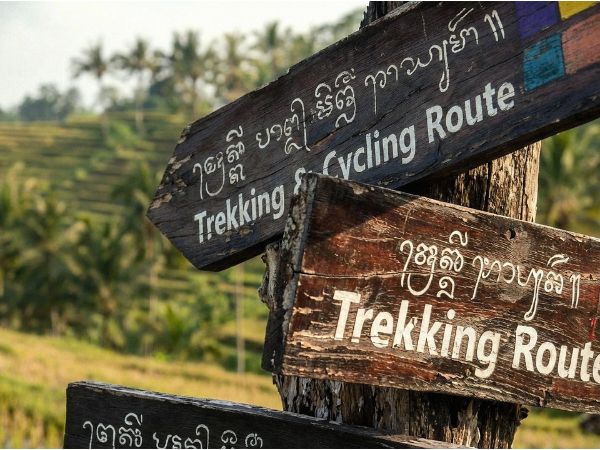
These hand-painted wayfinding signs in Tabanan express vernacular communication, where practical information meets the warmth of the artisan’s hand.
The energy of Kuta. For a change of pace, we’d head to Kuta Beach. There’s a certain kinetic energy there — from the lines of the surfers to the vastness of the sunset. It represents the “free-form” side of our creativity, where everything feels possible.
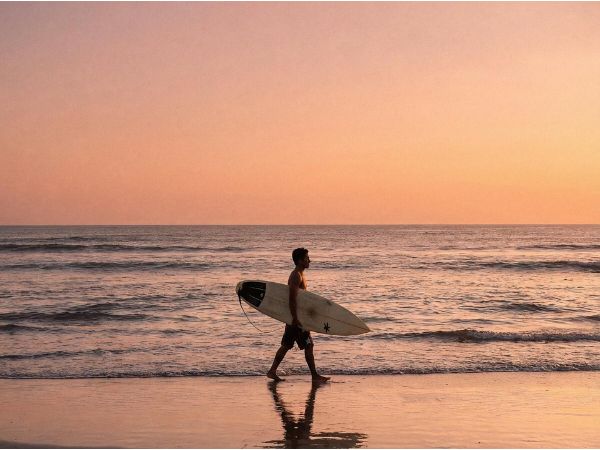
Kuta’s shoreline represents the more fluid, kinetic side of FactoryType Studio’s inspiration. Watching the surfers move against the vast horizon reminds Wahyu that great design should feel as effortless and free form as the ocean itself.
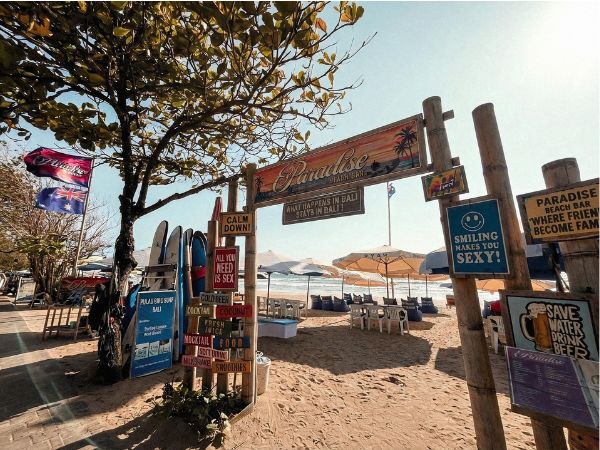
The vibrant signs of Kuta.
The creative pulse of Canggu and Seminyak. We’d finish the day in the vibrant creative hubs of the south. It’s a dynamic mix of global trends and local independent brands. This energy is what keeps FactoryType feeling fresh and connected to the world.
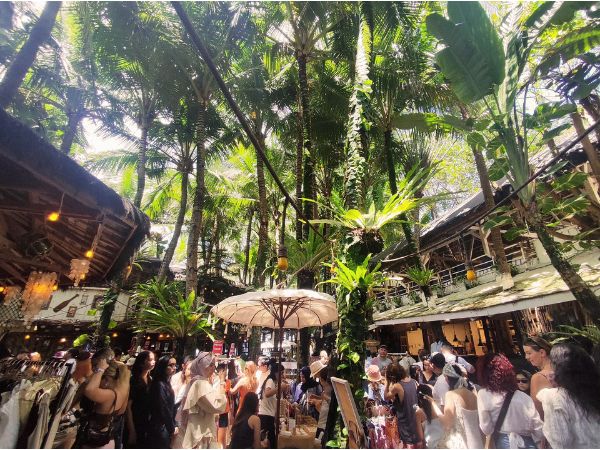
Canggu is FactoryType Studio’s living laboratory. It’s a vibrant intersection where global design trends meet local independent spirit.
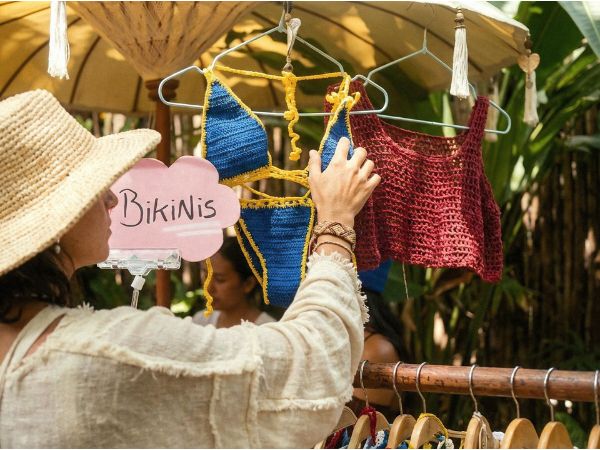
FactoryType Studio prioritizes the tactile and the human in their work — inspired by authentic, artisan products.
What’s a typeface that you think represents the spirit of your city and why?
To really capture the soul of Bali, I think you need to look at the balance between a serif and a sans serif — it’s a perfect reflection of how the island lives and breathes.
I see serif fonts as a nod to our deep heritage and craftsmanship. When we designed Edensor, for example, we were inspired by the elegant curves and fine details that remind me of traditional Balinese scripts and the organic flow of island life. Similarly, the intricate ligatures in Finico echo the decorative richness and centuries of discipline found in our temple carvings. These serifs carry a sense of history and refinement that is rooted in our culture.
On the other hand, a sans serif font represents Bali’s modern, open side. It’s straightforward, functional, and very contemporary. Typefaces like Ace Sans mirror the island’s role as a world-class creative hub — a place where new ideas are accessible, and innovation is everywhere.
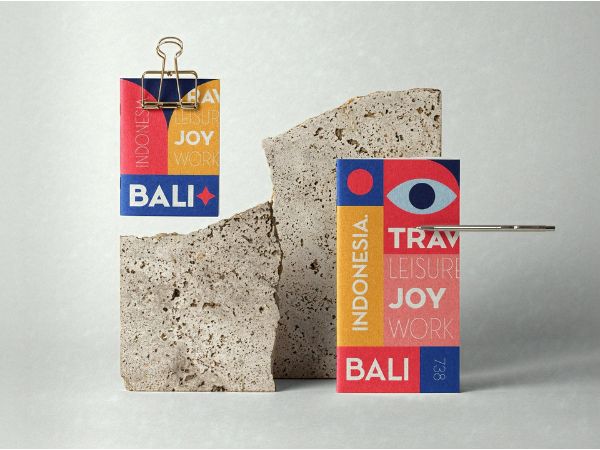
Ace Sans is engineered for maximum visual impact. From minimalist editorial layouts to bold brand statements, its geometric precision offers a clean, modern voice for any creative canvas.
Even in Beckman, you can see that sharp, architectural precision that reflects Bali’s modern infrastructure and global energy.
At FactoryType, we love playing in the space where these two worlds meet. Our work is at its best when we pair the structural traditions of the Serif with the clean, visionary clarity of the Sans Serif. For me, that combination is the ultimate metaphor for Bali: it’s ancient in its soul, but always cutting-edge in the way it moves forward.