Type Faces: Meet Dr. Jan Kaestner.
Spotlights
Spotlights
Type Faces: Meet Dr. Jan Kaestner.
Welcome to our Type Faces series, where we’ll be sharing the stories of some of the fabulous people behind the type here at Monotype. From all around the globe and across the organization, our Monotype colleagues truly prove that, like Charles Nix, Global Head of Creative Strategy at Monotype, always says, “We are ALL creative.”
A longtime Monotype colleague with a deep appreciation for music, nature, and the design space, Jan Kaestner brings curiosity to everything from choir rehearsals to questions of copyright law and the future of AI. Originally from Germany and now based near Boston, Jan is now Monotype’s General Counsel and has spent years building a career that combines logic and creativity in the application of law to typefaces and font software.
Read on to learn more about Jan.
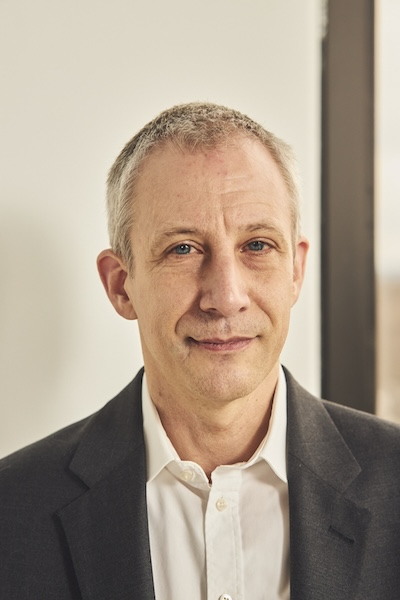
A portrait of Jan Kaestner.
You moved to the U.S. from Germany in 2021. What has that experience been like? What do you love about living here?
My general and very positive perception of the United States is still rooted in my one high school year as an exchange student here. At 17, I had the opportunity to live with a host family near Athens, Georgia, and graduated in 1988. That was where I got to know the culture better. Granted, that was a very different culture from the one in Massachusetts because it was the Southern United States, which is very different from New England.
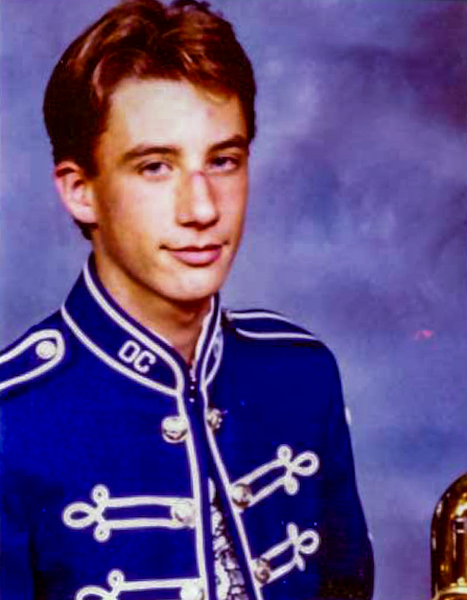
Jan in his high school marching band uniform, along with his mellophone.
Moving here in 2021, I already knew the company Monotype very well, I knew my colleagues, and I’d traveled to the U.S. many times before. What was new to me were all the administrative chores that come with actually living here — filing taxes, buying a house, health insurance, permits, all of that. Moving with my wife and son during Covid intensified the practical challenges.
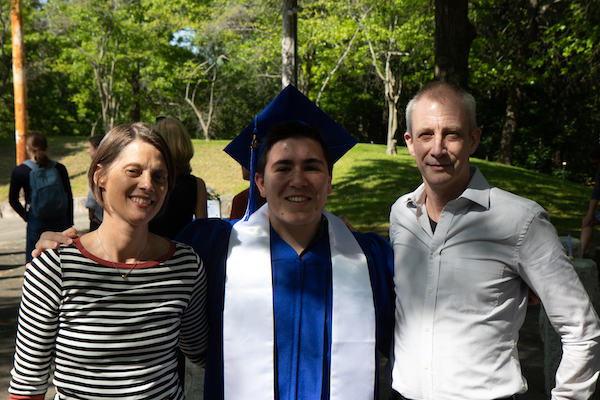
Jan’s wife, Caroline, and their son, Emin, at Emin’s 2023 graduation in Boston.
There’s a ton that I love about living here. We ended up in a very nice place. Melrose is a great city — walkable, with great neighbors and really good infrastructure. I can walk to buy food or go to a restaurant, and we like that a lot.
I’m also a huge fan of nature, and I think Massachusetts has so much more of that to offer compared to the Frankfurt area in the middle of Germany, where I used to live. Here, I can cycle half an hour to the sea. I can drive an hour and be in the mountains for a challenging hike or skiing. I’m half an hour away from wildlife reservations, lakes, and great cycling and hiking. Having all of that in such close proximity is utterly fascinating.
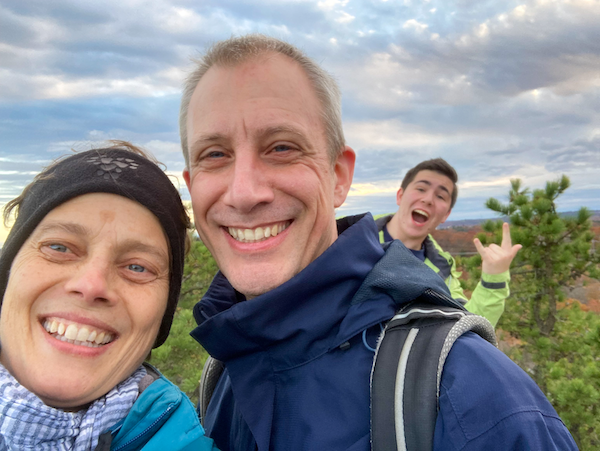
Jan, Caroline, and Emin (photobombing) hiking in the Breakheart Reservation.
And Boston is such a musical city. Because of the Berklee College of Music and the New England Conservatory, there are so many great musicians here — more than in any other city that I’ve ever been to.
What do you miss most about Germany?
Definitely my family. My parents are still in Germany, my sister and her family, and my wife’s brother and his family too.
And then, this sounds silly, but it’s part of culture: I miss great sourdough bread, cold cuts, cheese, and sausage. You can get good things here, of course, and there are good bakeries here, but it’s not the same. In Germany you have such huge variety, and that’s something I definitely miss – and why we started to bake our own bread.
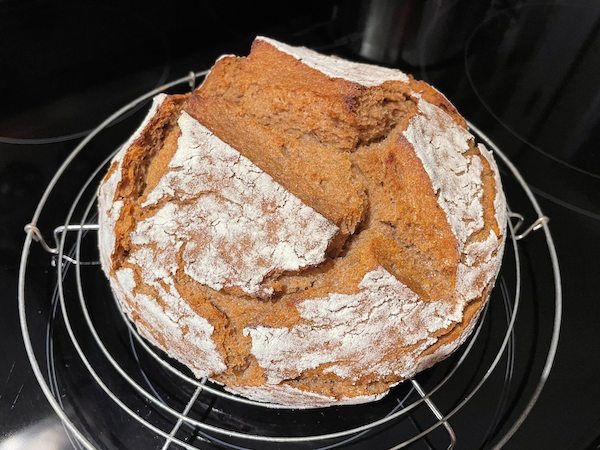
Homemade sourdough, made from a German starter.
Other than family and a couple of food things, I miss our friends, of course. But we’ve made a lot of friends here.
How does creativity fit into your life outside of work?
I am, and always was, interested in music. That’s my creative space more than anything else.
I learned the French horn when I was six and played it for 12 years, including the mellophone in the high school’s marching band. Then I got a little tired of mainly classical music, switched to guitar, and started singing and doing songwriting. And I’ve been in the music space ever since.
At the moment, I’m in a large choir, Polymnia Choral Society, in Melrose, the city where I live. I sing a lot, and my wife does too, so that’s a hobby we share; we’re both in Polymnia.
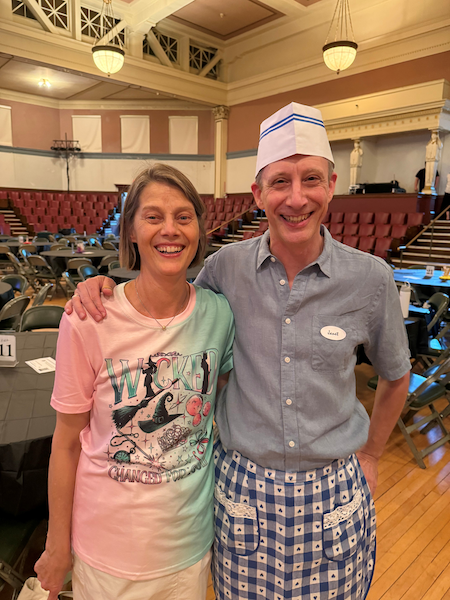
Jan and Caroline posing before their Broadway performance with the Polymnia Choral Society. Jan is dressed as waitress “Janet” — not a waiter — to stay true to the musical’s title.
I’m also in an a cappella group that works in different constellations (trios, duets, pretty much everything), and in a small band with two other people from the choir. We perform covers from groups like The Beatles, The Pretenders, and supergroup Crosby, Still & Nash — mostly material that allows us to harmonize.
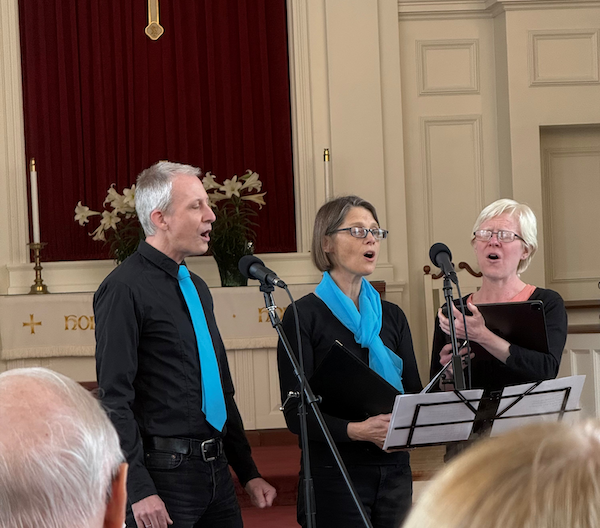
Jan, Caroline, and Beth performing with the Beethoven Society of Melrose. See videos of other Polymnia Choral Society performances here.
When you write music, where do you begin?
It’s always triggered by something, usually an emotion. I’m not someone who sits down and says, “I’m going to write a song every day.” That’s not what happens. It’s more like one or two songs a year, if something happens that stirs up some emotion in me and tells me, okay, this is something I can communicate better in a song.
And it always starts with the music, not the lyrics. That’s where I’m coming from. I’m usually writing in English, and I did that even when I still lived in Germany. After I spent a year in the United States in high school, that just felt more natural to me.
But since English is not my native language, I’m certainly not a great lyricist, and that’s fine. So, it’s always musicality first. I tinker around with melodies until I find something that sounds right, and then I try to find words that fit that melody and the topic I’m looking for.
By the way, I’m amazed by how well most people here in the United States know lyrics and sing. Whenever you go to a concert in Boston, people are singing along with everything. They know every single word. And I’m not that way at all. I barely remember lyrics to songs I love.
We saw the British band Keane in Boston, and everybody knew all the words and sang along.
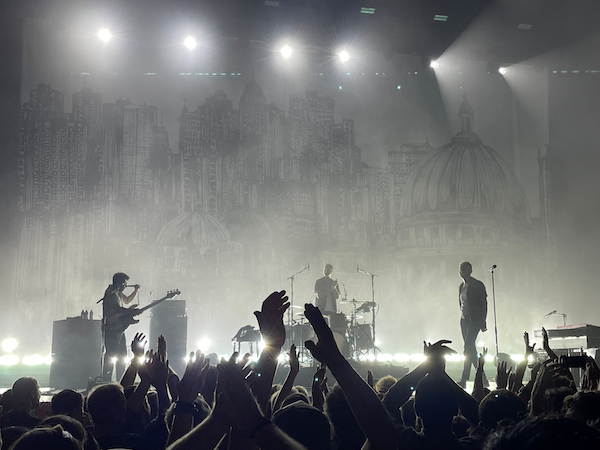
The Keane concert in Boston.
At some point the band stopped and said, “You guys know everything, and you’re singing great.” You could tell how moved they were by it. It was like the biggest choral experience I had, and it wasn’t even a choir. I’d never seen that before.
What kind of music do you come back to most?
I’m a huge R.E.M. fan. Automatic for the People is one of the greatest albums ever for me. But I probably wouldn’t know the lyrics to any R.E.M. song completely!
I’m also a fan of The Smiths and The The, so a lot of indie stuff. There are so many albums I really love, but if I have a choice, I will always listen to indie or pop. While the examples so far sound like I am stuck in the last century, there is a lot of newer exciting music as well: Billie Eilish, Phoebe Bridgers, Jade Bird, or even some Taylor Swift albums, like the more “folksy” collaborations with Aaron Dessner of The National. I do listen to classical music too, but that’s more where I came from than where I naturally land now.
Outside of music, how else do you spend your time?
We love to travel. My wife and I both love nature, which is one reason we love the U.S. national parks. I think the national park system is fascinating. It’s unique in the world, and I love it. They’re so well kept, and we love the ranger programs and pretty much everything about them.
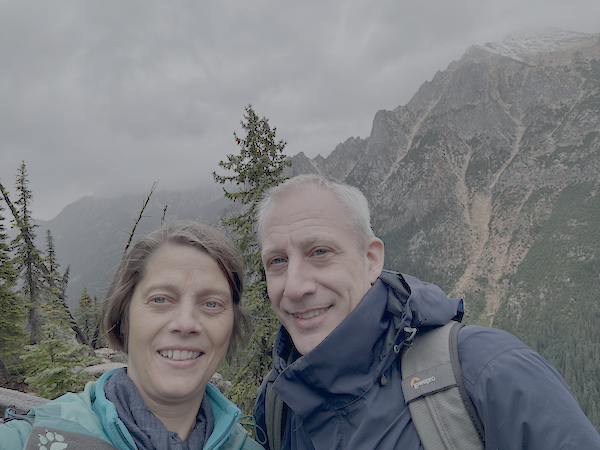
Jan and Caroline at Mount Rainier.
We’ve been to Acadia, Grand Teton, Yellowstone, Glacier, and Olympic, and this year we’re planning to visit some of the parks in the Southwest — Arches, Zion, and the Grand Canyon. I’ve never been to the Grand Canyon, so I’m really looking forward to that.
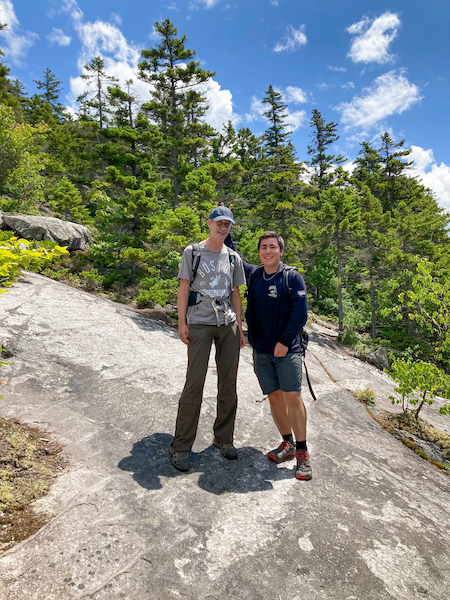
Jan and Emin in Maine.
I also used to play Magic: The Gathering quite a bit. I learned it from my nephews when they were young, and later it became something I shared with my son. We even went to Friday Night Magic tournaments together. I still have many thousands of cards in folders. I don’t really play in person now, but I do still play online occasionally. And I also play chess; the logical side of games always appealed to me. Computers and technology have always been a fascination as well.
What fascinates you about computers and technology?
Mainly the fact that there is always something new and interesting to learn and explore. In my lifetime, there were four events that I have found really transformative, both from a social perspective and from a personal perspective. The first was personal computing in the 1980s, when computers became a device you could have at home. I got a Commodore VC-20 when I was 11, and later a C64, so I was exposed to it very early. I programmed a lot — first in BASIC, then assembler, and later added further programming languages from Turbo Pascal to Python.
Then came the internet while I was at university. I got into that very early too, learned HTML and CSS, and created the first web pages for the law faculty at the University of Passau, where I was studying at the time.
The third really transformative event was smartphones. Not because I’m deeply interested in them as technology, but because they changed social life so much — how you communicate, how you’re available, how you navigate the world.
And now AI is the fourth one.
My affinity for computers is what led me to an interest in the font software space.
How did you end up at Monotype?
I wasn’t working in the font world before I joined. I worked at a nonprofit in Germany and was building up an information department there — organizing publications, seminars, newsletters, things like that.
Because we were so small, we basically did the publications ourselves. I typeset them, worked with InDesign, and started getting into that design space. For one series of books, I wanted us to have a consistent typeface, so I chose Optima and licensed it from Linotype.
A couple of years later, I saw a job posting from Linotype (shortly after it had been acquired by Monotype) and I thought, that’s funny, I know this company because I licensed fonts from them. So, I applied, got the job, and the rest is history.
I joined in 2008 as European legal counsel and became Monotype’s general counsel in 2021.
What do you love most about your work at Monotype?
There are many things I love.
I love the proximity to creators, and I love the design space. I’m hugely interested in fonts and font software, their technical aspects and the many different fonts that we have. It’s just a really interesting creative environment to work in.
I also have a fairly large legal team now, and it’s very diverse, which I really appreciate.
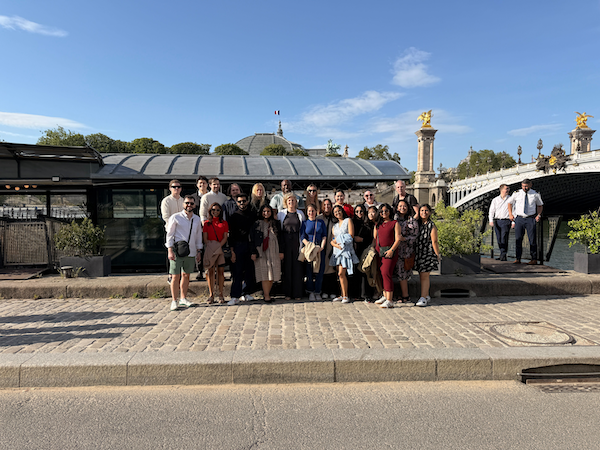
Some of the Monotype legal team members at the 2026 legal summit in Paris.
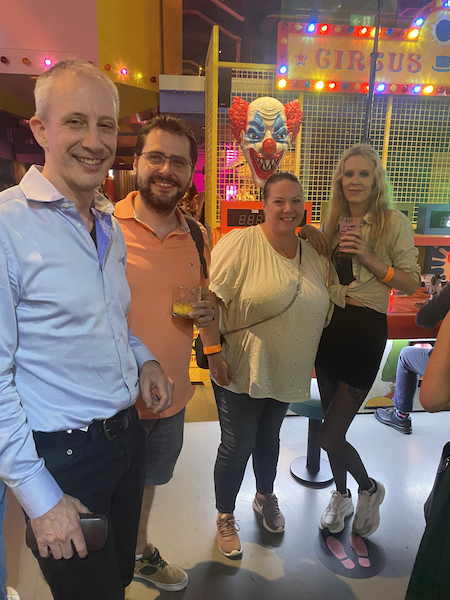
From left to right: Jan, Dan, Katelyn, and Nadja at the 2023 legal summit in London.
My colleagues are people across jurisdictions and cultures — India, EMEA, Japan, the Americas — all with different backgrounds and interests.
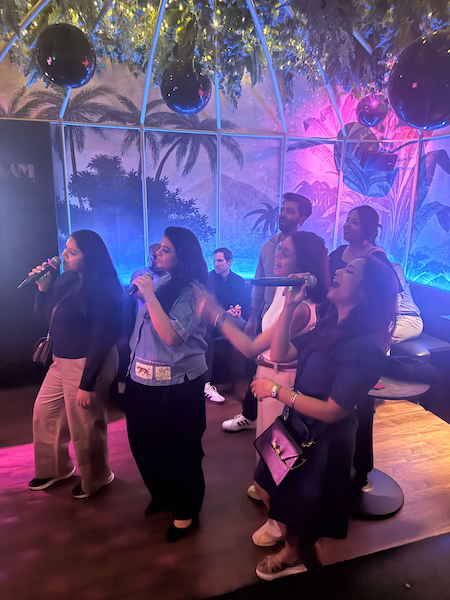
Karaoke fun for the lawyers at the 2026 Paris legal summit.
And I like my job itself. I chose law for a reason. I’m a fairly logical person, and I like to work on complex strategic or legal problems, with terms and templates and legislation. Thus, for me, it’s a great combination of things I enjoy doing.
What do you find interesting about type?
Type is everywhere. That’s probably the most fascinating part. You can’t really communicate in writing without type of some sort, so once you work in this space, you start walking through cities or looking at publications differently. You notice what typeface an enterprise is using, what a sign is using, what a publication is using.
It’s eye-opening because most people take it for granted. And I think almost everybody underestimates the importance of type — not just its ubiquity, but what it conveys, the emotional reaction that people have to it.
What also fascinates me is the combination of science and art. How do people react to different typefaces? What is more readable for dyslexics or for visually impaired readers? What works best in specific environments, like a navigation screen in a car? That combination of emotional effect and practical usefulness is both a science and an art.
Do you have a favorite typeface?
My favorite font still is the font I originally chose for that book series: Optima by Hermann Zapf.
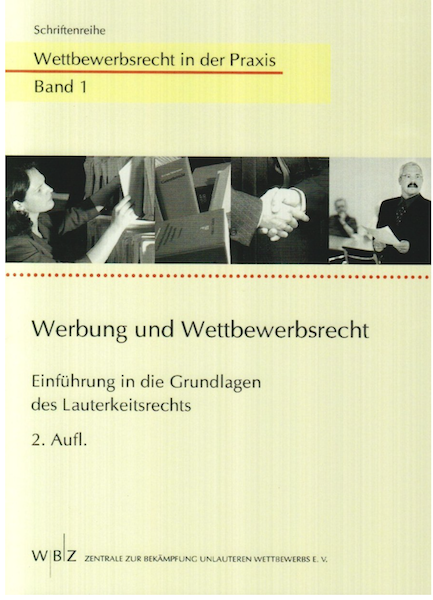
A book cover that Jan designed using Optima.
It’s a sans serif, but it does not contain any straight lines. That’s a fascinating choice. I like fonts with a concept. Futura is a great font too because of that geometric concept. I like typefaces that are really new and creative and bring something that hasn’t been there before.
What’s the most exciting thing you’ve done at Monotype?
There have been some exciting acquisitions that I found challenging and interesting, because you get a glimpse into how other companies operate and how they maintain their intellectual property.
Then there are a lot of interesting legal questions around the intellectual property of typeface design and font software, especially when applying an international perspective. It’s a topic that runs through my whole history with Monotype.
And then, more recently, AI. I’m hugely interested in it because I see what it can do for the legal team, and I’m working with AI all the time now. I’m skeptical of what it means for lawyers in general, especially young lawyers entering the field, but I find it utterly fascinating what is already possible.
How do you see AI impacting Monotype in the coming years?
One possible application is using AI to help generate fonts or create outlines that can then be implemented and integrated into fonts. We’re already seeing that it can help, for instance, when creating character extensions for existing fonts or when converting typeface designs. That’s really interesting.
At the same time, from an IP perspective, it raises real questions, and we want to be deliberate and responsible in how we use the new technology. We don’t want to reposition ourselves in a space where it’s all AI-generated. We want to continue producing highly creative, human-generated fonts. The challenge as often with new technology is finding the right use cases and balance.
The second big perspective is productivity: how can AI help Monotype become more effective and more productive? How can it help us accelerate growth?
For the legal department specifically, I think AI will be game-changing. We’re experimenting with redlining skills, contract review, and translations. The impact is quite staggering already, and I expect it to further increase dramatically because we are only about two years into the AI revolution.

General Counsel
Dr. Jan Kaestner.
Dr. Jan Kaestner joined Monotype 18 years ago as the second lawyer to be hired by Monotype and now leads a team of 40 legal counsels in five jurisdictions. He and his team collaborate with all business units across Monotype to provide top-quality, fast, and business-focused practical advice.