Why brand consistency breaks in enterprise organizations.
Brand consistency breaks in enterprise organizations when teams lack a reliable system for governing, distributing, licensing, and deploying brand assets across every touchpoint. Typography is a common point of failure because fonts move across creative tools, agencies, regions, products, websites, apps, and documents — often without centralized visibility, version control, or operational governance.
Most enterprise brands don’t lose consistency in one fell swoop. They lose it gradually, through hundreds of small operational gaps — a substituted font in a regional campaign, a product team shipping a different weight in an app interface, an agency using an outdated file, a sales team building presentations from old templates. Individually, these decisions seem minor. Collectively, they create visual drift across campaigns, products, channels, and customer touchpoints.
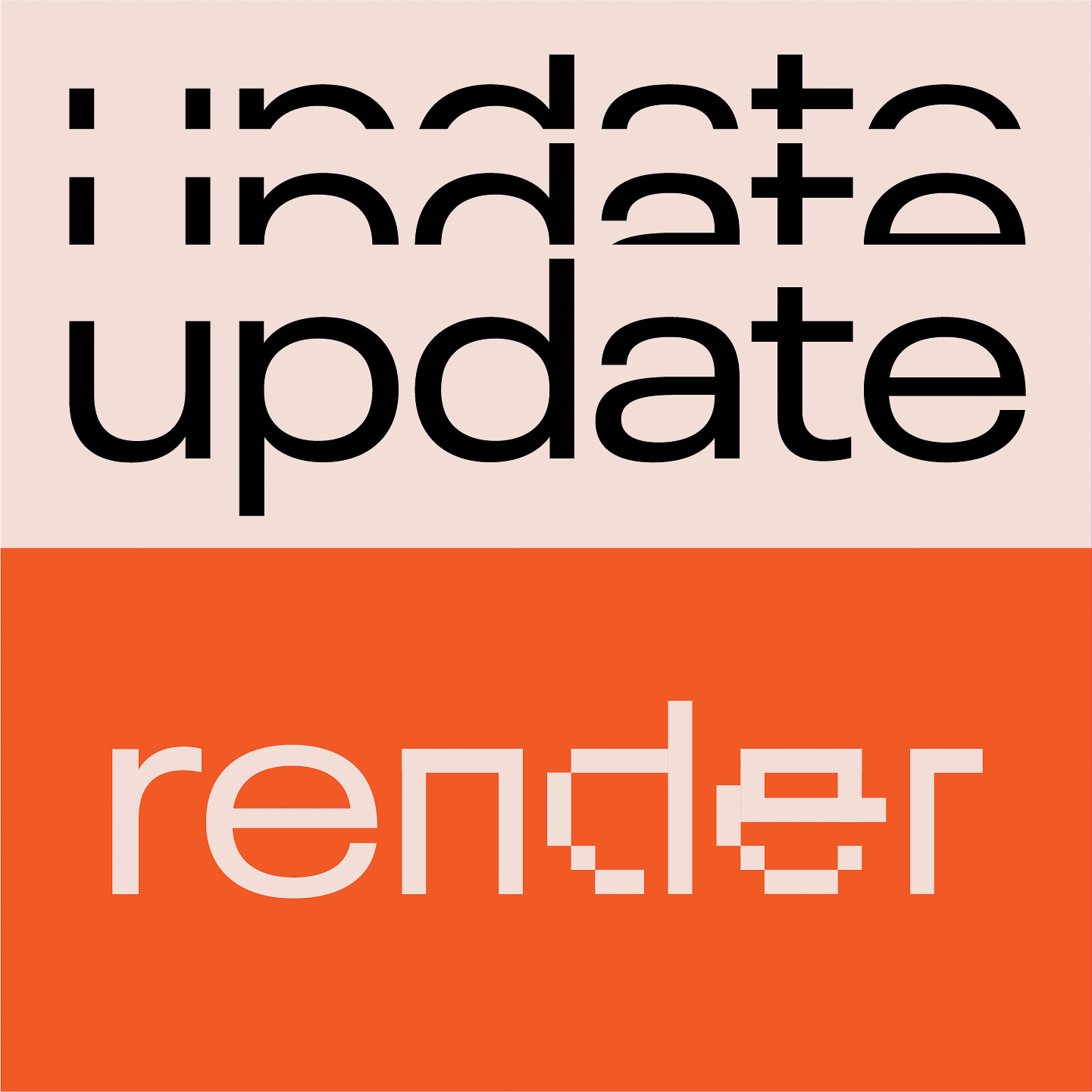
To prevent these breakdowns, enterprise teams can achieve brand consistency at scale with a Typographic Operations (TypeOps) model — an operational system that connects typography governance, workflows, deployment, and brand execution at scale.
Why brand consistency rarely fails in the brand book.
Enterprise brands often start with strong foundations: clear standards, thoughtful guidelines, creative processes, and a shared vision for how the brand should show up. There may already be:
- Brand guidelines
- Design systems
- Typography standards
- Brand portals
- Templates
- Creative governance processes
- Approved type systems
The challenge is that guidelines alone don’t enforce consistency across enterprise workflows. A brand book can specify which typeface should appear in a campaign, but it can’t guarantee every team has access to the correct licensed version. A design system can define typography rules for digital products, but it can’t automatically prevent outdated files, substituted weights, unsupported scripts, or unlicensed assets from entering production. This is where enterprise brands begin to drift.
Typography moves through fragmented systems.
- Creative teams use different tools and workflows.
- Agencies maintain separate production environments.
- Product teams manage typography differently across apps and web environments.
- Procurement negotiates licensing agreements.
- Legal teams interpret rights and usage restrictions.
- IT governs deployment and access.
- Regional markets adapt assets for local languages and cultural needs.
- Sales teams create customer-facing materials outside centralized systems.
The more a business grows, the more typography complexity expands across regions, platforms, and partner ecosystems. Typography touches every product, channel, and region, yet many organizations still manage fonts informally, manually, and inconsistently.
The guideline.
the lazy dog.
Helvetica Now Display Bold
What ships.
the lazy dog.
Neue Helvetica Heavy
Guidelines define the brand. Operations determine whether the brand actually shows up consistently.
What causes enterprise brand consistency to fall apart?
Enterprise brand inconsistency rarely comes from one single major failure. As organizations expand across markets, products, digital platforms, agencies, and production environments, typography workflows become increasingly distributed — and fonts move through systems that were never designed to stay synchronized.
Fonts live in too many places.
Approved font files are often scattered across:
- Shared drives
- Desktop folders
- Cloud storage platforms
- Agency archives
- Email attachments
- Legacy servers
- Local machines
Without a centralized system of record, teams rely on whatever files are easiest to access — creating inconsistent usage, outdated versions, and unmanaged distribution.
Teams use different versions, weights, and styles.
Even when teams use the correct font family, inconsistency appears through:
- Different font versions
- Incorrect weights
- Unsupported file formats
- Substituted styles
- Missing variable font support
42% of creative teams struggle with font version control — small differences that compound into fragmented brand experiences across products and channels.
Licensing rules vary by use case.
Typography behaves simultaneously as brand expression, licensed software, workflow dependency, technical infrastructure, and intellectual property. Rights often vary across:
- Web
- Apps
- Ecommerce
- Packaging
- Advertising
- Broadcast
- Regional usage
- Agency workflows
68% of organizations struggle with font licensing complexity. When rights are unclear, teams either slow down for approvals or create workarounds that compromise consistency.
Agencies and partners introduce unmanaged assets.
Enterprise brands rely heavily on agencies, freelancers, localization vendors, and production studios. Every external handoff creates additional risk:
- Outdated files
- Missing fonts
- Silent substitutions
- Unlicensed versions
- Unsupported formats
- Inconsistent deployments
Regional teams create practical workarounds.
When approved typography systems don’t fully support localization requirements, regional teams often adopt substitutes to meet operational deadlines. These are usually practical decisions, not governance failures — but over time, these localized workarounds fragment the broader brand system.
Digital products create technical complexity.
Typography behaves differently across websites, mobile apps, ecommerce platforms, product interfaces, CMS systems, design systems, browsers, operating systems, and rendering environments. Different font formats serve different technical purposes:
- .woff and .woff2 optimize for web performance
- .otf supports advanced desktop typography
- .ttf is commonly used for mobile applications
When organizations deploy inconsistent formats or workflows, typography rendering becomes fragmented across devices and experiences.
Brand governance can’t keep pace with production speed.
Creative production moves quickly. Governance processes often don’t. When teams wait too long for approvals, file access, licensing clarification, or deployment support, they create workarounds that prioritize speed over consistency. This isn’t a failure of discipline — it’s a symptom of disconnected systems.
No single function owns typography across the enterprise.
Typography sits between multiple enterprise functions:
- Brand
- Creative Operations
- IT
- Legal
- Procurement
- Product
- Design Systems
- Marketing Operations
Brand teams define standards. Creative teams execute. Legal manages licensing. IT governs deployment. Procurement negotiates renewals. Product teams adapt typography for technical environments. Without a shared operational framework, ownership fragments and consistency becomes difficult to sustain.
What brand inconsistency looks like in real enterprise workflows.
Typography drift is rarely theoretical — it shows up in everyday enterprise workflows, often without anyone deciding it should happen.
- A global campaign launches with inconsistent typography. Corporate brand teams distribute approved assets globally, but regional agencies adapt the work with different weights, versions, or substitutions — the campaign stays recognizable, but visual cohesion weakens across markets.
- A product team swaps fonts late in development. An application team discovers embedding rights for the approved typeface are unclear. To avoid delaying release, they substitute another font — the product no longer aligns with the broader brand system.
- An agency delivers unsupported font versions. An external partner uses legacy files from a previous engagement. Internal teams opening them hit missing fonts, rendering issues, and reflow problems that require manual correction.
- Regional teams create localization workarounds. The approved system lacks support for required scripts or languages. Local teams adopt alternative typefaces to support multilingual content, unintentionally fragmenting the global brand.
- Sales teams rely on outdated templates. Customer-facing teams often operate outside centralized brand systems. Old templates, embedded fonts, and outdated assets stay in circulation long after brand updates occur.
- Rebrands expose hidden operational gaps. Organizations discover they can’t easily confirm which fonts are approved, which teams have access, or which licenses cover which use cases — and the rebrand slows while teams manually audit fragmented environments.
The operational cost of inconsistent brand typography.
Brand inconsistency isn’t just an aesthetic problem — it creates measurable operational, financial, and organizational consequences.
Slower creative production.
41% of creative professionals spend 26–40% of their time on non-creative work. Creative teams frequently lose time to:
- Missing fonts
- Version conflicts
- Manual installs
- License verification
- File troubleshooting
- Rework
- Rendering corrections
We estimate manual font issues can consume more than 30 hours per creative, annually.
More review cycles and rework.
Brand reviews identify discrepancies late in production. Agencies resend assets. Developers revise interfaces. Campaigns pause while teams reconcile typography issues.
Greater compliance and licensing exposure.
68% of organizations lack centralized visibility into rights models, regional permissions, deployment coverage, active usage, and expiration dates — creating operational hesitation during:
- Audits
- Rebrands
- Global launches
- Vendor transitions
- Product releases
Lower brand trust and recognition.
Customers rarely notice typography directly — they notice the cumulative effect. Fragmented typography weakens recognition, reduces perceived professionalism, and creates disconnected customer experiences.
Tension between global and regional teams.
Centralized brand teams often prioritize consistency; regional teams prioritize speed and localization. Without scalable governance infrastructure, typography governance can feel restrictive instead of enabling.
Reduced confidence during transformation initiatives.
Typography fragmentation becomes especially visible during:
- Rebrands
- Mergers and acquisitions
- Global campaigns
- Design-system rollouts
- Localization expansion
- Digital transformation initiatives
- Product launches
Organizations struggle to move confidently because they lack clear visibility into how typography is currently governed and deployed — and without it, even well-planned transformation efforts can introduce inconsistency, duplication, and visual drift at scale.
Signs your brand consistency problem is really a TypeOps problem.
If brand inconsistency persists despite strong guidelines, the issue may be operational rather than creative. Use the checklist below to identify common TypeOps gaps.
The more of these conditions exist, the more likely typography has become an operational bottleneck. It’s time to build a managed brand system that fits your organization’s unique challenges.
Understanding why consistency breaks is step one.
Building a TypeOps model is how enterprise organizations prevent it from breaking again.
Frequently asked questions.
Brand consistency often breaks when teams, regions, agencies, and platforms lack a shared operational system for accessing and using approved brand assets. Typography is a common source of inconsistency because fonts move across many workflows, tools, licenses, and environments.
Brand guidelines define how the brand should appear, but they don’t automatically control access, deployment, versioning, licensing, or usage across teams. Enterprise consistency requires both guidelines and operational governance.
Typography shapes how a brand looks and feels across every touchpoint. When teams use the wrong font, weight, version, substitute, or license, the brand experience can fragment across campaigns, products, websites, apps, presentations, and regional executions.
TypeOps is the operational discipline that enables typography to be deployed consistently, legally, and efficiently across internal teams and external partners, to every surface, device, and system, globally. It combines centralized access, governance, workflows, and deployment tools — how typography moves from files to infrastructure.
By centralizing font access, clarifying licensing rights, standardizing approved versions, supporting localization needs, integrating governance into workflows, and establishing cross-functional ownership.
Font governance is usually cross-functional: Brand and Creative teams define standards, Creative Operations supports workflow adoption, Legal and Procurement manage rights and agreements, Product and Design Systems teams support implementation, and IT governs deployment and access.
Typography should be treated as an always-on operational capability, not something reviewed only during major campaigns or rebrands. The stakes rise during high-visibility moments — rebrands, product launches, global campaigns — where scrutiny often reveals inconsistencies that accumulated over time.